The greatness of the inverted way of the Lord (Acts 20:16-18, 28-36)
28 May 2026
Our God is not an indefinite and impersonal supreme power. Already in the Old Testament He is revealed as the personal and living, ‘God of Abraham, Isaac, and Jacob’ (Exod. 3:16). When the fulness of time was come, the Son and Word of God Himself came to the earth and imparted to men the word of the Heavenly Father. He became the ‘Father of the world to come’ (Isa. 9:6 LXX). From the Lord Jesus ‘the whole fatherhood in heaven and earth is named’ (Eph. 3:15). In the New Testament, the apostles became Fathers par excellence. They traversed the whole world, sowing the incorruptible seed of the word of truth. For this reason, the Church of Christ is called ‘Apostolic’.
Today’s reading from the Acts recounts events shortly before Paul’s final arrest. With firm resolve, the apostle had set his face towards Jerusalem, where he desired to feast Pentecost. He was straitened by the desire ‘to be released, and to be with Christ’ (Phil. 1:23). He remained ‘in the flesh’ for the sake of the perfecting of the faithful. A certain prophet from Judaea, Agabus, foretold clearly that Paul was about to be seized in Jerusalem and delivered ‘into the hands of the Gentiles’. The Christians then sought to dissuade the apostle from going up to the holy city. Paul, however, answered: ‘I am ready not to be bound only, but also to die at Jerusalem for the Name of the Lord Jesus’ (Acts 21:10-13). He lived as ‘the prisoner of Jesus Christ’ (Eph. 3:1), and wherever this ‘bond’ exists, there the word of God bears abundant fruit.
Paul summoned the presbyters of Ephesus. He delivered to them his last exhortations, but he also warned and prepared them for the trials to come. For Paul, to neglect the Church was the same as despising the most precious Blood, by which the Almighty Jesus had purchased His people. Having completed his final teaching, the apostle commended his disciples to God and to the word of His grace. He knelt down and began to offer the prayer of farewell, in imitation of Christ, Who, after the life-bearing words at the Last Supper, offered His High-Priestly prayer to God the Father. The faithful fell on Paul’s neck and kissed him.
But how were poor and unlettered fishermen transformed into Fathers and teachers of the world unto the ends of the earth and to the end of time? The apostles were the closest imitators of Christ the Master. Thus we will find the answer in the Person and in the way of the Lord Jesus. The Prophet Isaiah foretold that every word proceeding out of the mouth of God does not return void before it has accomplished its work (Isa. 55:10-11). In the absolute sense, the Word of God is Christ, Who came to earth, was made man, and did not return to the bosom of the Heavenly Father before He had completed the work of His obedience to Him, the dread dispensation for the salvation of the world.
Every divine gift springs from and is governed by the descent and ascent of Christ. There is no other way for man to find the fulfilment of his destiny. On the path of self-emptying, apostolic enlargement is wrought. After Paul had come to know Christ, Who loves without measure, on the road to Damascus, he offered repentance ‘with strong crying and tears’ (Heb. 5:7). He could not forget that he had ‘persecuted the Church of God’ (1 Cor. 15:9), that he had been ‘an injurious blasphemer’ (1 Tim. 1:13).
For man, the first movement on the way of descent is repentance. Through this ascetic labour he cleanses himself from whatsoever hinders the indwelling of divine love in his heart. Then he acquires ‘the mind of Christ’ (1 Cor. 2:16). The thoughts and the will of God become his own. What is the will of God? The salvation of all. Was it not for this purpose that He came to earth and died a shameful death? Did He not shed His precious Blood in order to redeem man from corruption?
When man acquires the state of Christ, a great martyrdom begins. Christ opens the noetic eyes of his heart, that he may behold the grandiose destiny foreordained by God for him, but also the wretched fall of mankind. The servant of divine love knows that no one has come into this world by chance. With the love of the Beloved, he loves the whole world, and desires the salvation of all.
The great Paul, constrained by the desire that all may be saved, became ‘all things to all men’ (1 Cor. 9:22). He and the other apostles followed the Lord in His descent and ascent. Their hearts were enlarged. Before they preached the ‘salvation’ of Christ to all the nations of the earth, they had made those nations the content of their heart. Their example reveals a law of spiritual life: it is impossible for a man to impart a spiritual gift to his neighbour, if he has not first lovingly embraced him in his heart.
From the moment of Paul’s conversion, Christ became the centre of his life. He counted everything else as ‘dung’ (Phil. 3:8). Only a twofold longing constrained him: that ‘whether by life, or by death’ Christ might be magnified in him (Phil. 1:20), and that every man might be granted entry into the Kingdom of His immaculate love. On the night of the Last Supper, Christ prayed to the Heavenly Father. He regarded as His own glory the glory that those who would believe in Him were to receive, the glory that sprang from His Cross and Resurrection. Likewise, for the great Paul, His radiant imitator, wealth and grace were the grace received by his disciples. For this reason he said to the Thessalonians: ‘For now we live, if ye stand fast in the Lord’ (1 Thess. 3:8).
* * *
Question: What does it mean that ‘when man enslaves himself to God, the divine word is abundantly at work within him’?
Archimandrite Zacharias: The apostle says that Christ, ‘when He ascended up on high, He led captivity captive’ (Eph. 4:8), that is, He freed the faithful from the dominion of the devil. In essence, the Christian life must be a captivity. If man’s mind and heart are not brought into captivity to the word and the Spirit of the Lord Jesus, if he is not freed from the dominion of sin, he cannot live as a Christian, nor run behind the Author of his faith, Christ (Heb. 12:2) in holiness and righteousness. Only he who is held captive by desire for God runs with joy the way of salvation and follows Christ effortlessly, because grace labours for him (1 Cor. 15:10). So great is the calling of the Christian that, unless he gives himself over to this sacred and sublime spiritual captivity literally and fully, he will not be able to respond worthily to the calling of the Lord Jesus.
All the Lord’s dispensation of salvation was a striving of attraction. He did not come to earth in order to impose His way, but to reveal it. He Himself said, ‘And I, if I be lifted up from the earth, will draw all men unto me’ (John 12:32). In this perfect manner, He fulfilled in a godly manner those things which the Providence of God had ordained for man ‘before the world began’. In general, what makes our life difficult is that God does not impose Himself, but reveals Himself to us in manifold ways, and waits for us to honour this revelation, to be drawn to its truth and wondrous spirit, and so to attain the great purpose which God has set for every man that comes into the world.
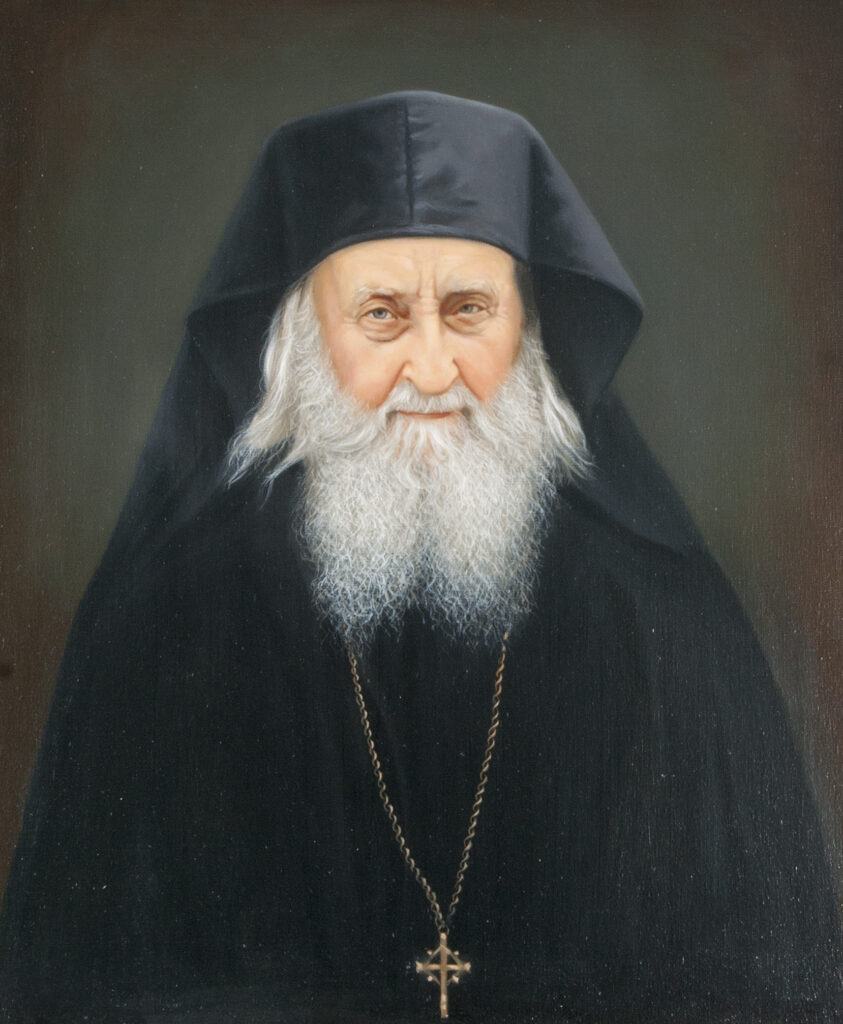
Saint Sophrony of Essex
Question: Saint Sophrony sets faith in the Divinity of Christ as the first prerequisite of repentance, and you said that without right faith man cannot find his heart. Could you explain to us the relation between faith and life of the heart?
Archimandrite Zacharias: Without faith man cannot fulfil the purpose of his life, because by faith he receives grace. When man accepts the word of faith, grace draws him to perfect ‘holiness in the fear of God’ day by day (2 Cor. 7:1), and reveals to him both the greatness of the calling of God and also his own utter poverty and estrangement from Him. Then man finds himself, as it were, divided. He sees the perfect, the holy, the supranatural, the eternal attracting him and calling him to union with it; and he also sees his life in the light of the Person of God, and freely places himself under the judgment of His commandments. Then a fierce desire for repentance is born within him, the longing to do all to stand in that which God has been pleased to reveal to him.
Consequently, man comes to repentance when he beholds the sublime perfection and glory of God and compares it with his own corruption and lowliness. Without this twofold vision, man cannot offer true repentance; and without repentance he cannot enter into his heart. When repentance becomes fervent, then the heart is freed from all its passionate attachments and turns wholly towards God. And God delights to dwell in such free hearts, turned towards Him with longing and reverence.
Question: Can we say that each one’s Pentecost is found at the summit of the inverted pyramid? How do we reach it in our daily life?
Archimandrite Zacharias: Saint Sophrony expressed it in one sentence: ‘Those who are led by the Holy Spirit never cease to go downwards, blaming themselves;’ that is, they never cease to place themselves upon the humble way which Christ traced by His descent and His ascent. Therefore, man will find God and the Spirit of Pentecost, and will be led by Him, only when he comes to know the way of Christ, when he walks it and acquires the Spirit of this way. Then the Lord, Who is Himself the Way (John 14:6), becomes man’s Fellow-traveller and imparts to him His own state and grace.
When man reaches the summit of the inverted pyramid, his heart is enlarged through his journeying together with Christ, and he receives His desire for the salvation of the world – a desire which brought Him to earth, raised Him up to Golgotha, and then brought Him down even to the nethermost parts of the earth. Those, therefore, who know this way receive the enlargement of the state of Christ, and then there begins in their life another fearful ministry, the ministry of the saints, the intercession for the salvation of the whole world.
Question: Can one live Pentecost without going first through a spiritual earthquake?
Archimandrite Zacharias: It is not possible. Both the New and the Old Testaments say that ‘we must through many afflictions enter into the rest of heaven’ (Ps. 34:19; Acts 14:22). Afflictions free the heart from every attachment to the vanity of this world. Then man is able, with a free heart, to turn wholly towards God, from Whom he expects all things. Without an earthquake, man cannot become an image of Pentecost.
Monks live this spiritual earthquake in their rule of prayer and in their obedience, but it is followed by the incorruptible consolation of the eternal Spirit. There are two kinds of repentance. The first is when we become aware of our spiritual poverty and alienation from the Holy of Holies, and we offer supplication to God with mourning and many tears, so that He may cleanse us from the pestilence of sin. Only then can man become a vessel for the gifts of the Holy Spirit, which bear witness to his salvation. Man cannot belong to the Body of Christ if he does not possess a spiritual gift.
The second kind is completely different. It is expressed by the spirit of the period from Easter to Pentecost. We thank God continually for the grace of the Resurrection which we received on the night of Easter, for the great sacrifice which He offered on Golgotha for our sake, and for all His blessings, with which He unceasingly cares for our life. And the more we thank God, the more our desire increases to thank Him even more perfectly, because this is the only thing that has value in our life.
Then there comes a moment when we want to offer God perfect thanksgiving, but we see that we are not able. At that moment begins repentance born of gratitude and love for our Benefactor God, which also shakes man to his very foundations, perhaps even more than the earthquake of repentance to which he submits himself in order to overcome his spiritual poverty. Both kinds of repentance fulfil the same need: that of offering to God whatever he has that is most perfect and most precious in his life, so that in return he may receive from God all that is His, the grace of adoption. ‘All that I have is thine’ (Luke 15:31).
Question: For the monk, can this earthquake be caused by a heavy obedience, or does this concern every aspect of obedience?
Archimandrite Zacharias: It concerns every aspect. As the Elder explained to a young woman, we must turn into prayer every pain, all our sorrowful love and our contrition brought by tears. Then the desired end will come: divine consolation, a preliminary knowledge and taste of the perfect freedom that the Spirit of God imparts to the heart of man. Thus, if the monk receives his obedience with a humble spirit and with the aim of fulfilling it for the sake of the commandment he has received, he will be greatly benefited. It does not matter how it all begins; let the pain come and let us make it prayer.
Question: What is ‘the right spirit’ (Ps. 51:10) which we ask the Lord to renew within us?
Archimandrite Zacharias: It is the Holy Spirit. It is ‘upright’, straight, for it inclines neither to the left nor to the right. It is irrevocably turned towards the fulfilment of the commandments of God.
Question: What are the prerequisites for the word of God to bear abundant fruit in the heart?
Archimandrite Zacharias: First, the fear of God: the word of God loves the heart of the man who fears Him and does not wish to grieve His Spirit. Secondly, there is the spirit of contrition that comes when man approaches God with self-reproach. He continually takes the blame upon himself and gives glory to God for His perfect and saving righteousness. In this way, he becomes fit for the indwelling of the word within him. The holy Fathers say that when man lives with deep repentance and many tears, he opens his mouth and attracts the Spirit of God (Ps. 119:131). Then the heart is cleansed and becomes ever more fit for the knowledge of the word of God, for its indwelling in the heart, but also for its transmission to the brethren.
He who has the Holy Spirit utters no ‘corrupt communication’, but offers a ‘good word’, which informs the hearts of the hearers with grace for their salvation and edification (Eph. 4:29). You see, we Christians cannot live without theology, that is, without prayer. The Christian is a theological being. Even when we say, ‘Lord Jesus Christ, have mercy on me’, we theologise, since we confess the Divinity of Christ and put our confidence in the gift of His salvation. Many truths are hidden within this short prayer. For this reason, the holy Fathers often repeated: ‘If you are a theologian, you pray truly; and if you pray truly, you are a theologian.’
Question: Why did the Church appoint this Gospel to be read today, which reminds us of the uttermost love of Christ for man?
Archimandrite Zacharias: After His Resurrection, the Lord promised that He would not leave us orphans (Matt. 28:20). And yet, ten days before Pentecost, the Ascension intensified the longing and expectation of the disciples for the Promise of the Holy Spirit. The reading of the Gospels and the Book of Acts, the hymns and every prayer of the Church, all contribute to strengthening this longing.
Christ told His disciples to remain in Jerusalem in prayer and not to separate themselves from one another until they were endued with power from on high (Luke 24:49). He wished to strengthen them with this gift, so that they might be perfect, moved by the Spirit, that His Spirit might guide them ‘into all truth’ (John 16:13), that is, into the perfection of love for Christ. Today’s Gospel speaks in such a way that the disciples may come to Pentecost with desire and thirst, and be fit to receive the gentle breeze of the All-Holy Spirit, Who will heal their nature wounded by sin and enable it to contain within itself the fulness of the love of Christ.
Question: What does it mean that by knowing our highest purpose we overcome temptations?
Archimandrite Zacharias: The higher our vision is of the perfection of God and of His love, and the more we know the perfect destiny which He has set before us – to become children of the Father without beginning and to reign eternally with Him in His Kingdom – the greater our desire becomes. For this reason, all the things of this world appear meaningless or dull, without substance. In We Shall See Him as He Is, Saint Sophrony writes that if we keep before us the great destiny of our divine adoption, then all the thoughts of the enemy are immediately dissolved, and we are freed from continual converse with them and from their relentless assault. For we are attracted by something infinitely higher, of which we have experienced. ‘Having lived the Resurrection’, says the troparion; but we may also say: ‘Having lived the coming of the Holy Spirit.’
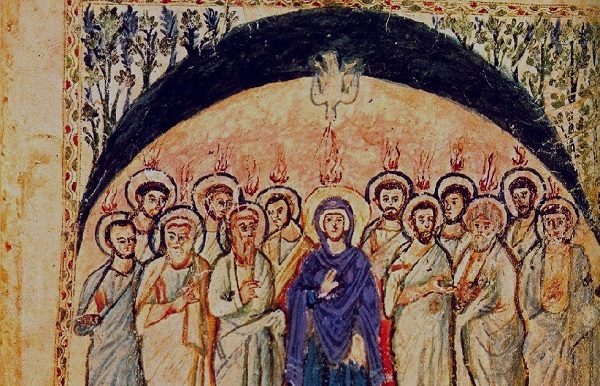
Question: Is Pentecost perhaps overlooked in comparison with Christmas or Easter?
Archimandrite Zacharias: On the contrary. The Church ordained that there be no fasting for twelve days after Christmas, showing that He Who was born is ‘the pre-eternal God’. After Easter we do not fast for one week. The Church appoints the same for Pentecost: there is no fasting for one week after this feast, which shows that both Christ and the Holy Spirit are Divine Persons of equal honour. Christ comes at Christmas and becomes man among us. At Pentecost, the Holy Spirit comes in order to strengthen our nature, so that we may be able to accomplish godly works and contain the fulness of Christ’s love. The Orthodox Church is utterly Pentecostal, because all her saints continually emphasise that the purpose of our life is the acquisition of the Holy Spirit.
Question: Why does the Church appoint the Kneeling Vespers on the day of Pentecost?
Archimandrite Zacharias: Self-condemnation and repentance beget boldness and help man find contact with the Spirit of God. Every time he receives the gentle breeze of the Holy Spirit, especially on that day when grace is so dense, he bends the knee before the Lord Who gives him such a great blessing. The prayers we read at Vespers on the day of Pentecost bear a divine enlargement. Through these prayers, the spirit of the Christian embraces all creation, both the living and those who have fallen asleep. Contact with the Spirit of God imparts to him such a state that the desire and prayer for the salvation of the whole world is born within him.
We see this also in the act of kneeling. We bend the knee, as these prayers say, before God our Benefactor, and we give thanks to Him for all men. This is an act of reverence and gratitude towards God. For this reason, the faithful are fond of kneeling, because they want to show God that they worship Him not only with their mind and spirit, but also with their body. Then the body also learns to pray. The Elder once said to me: ‘Make prostrations, so that the body too may participate in prayer. I do not want you to exhaust yourself with prostrations, but make enough of them, so that the body also becomes accustomed to praying together with the spirit.’
The great prayers of the Kneeling Vespers contain a mighty thirst for God and show man’s most perfect stance before Him: ‘Against Thee do we sin, O Christ our God, but Thee alone do we worship.’ This is the true meaning of the Christian life; this is the ethos of the Orthodox faithful: they confess their sin against God, yet they do not cease to worship Him with all their heart, until their worship swallows up all their sins.